Physical Development in Reception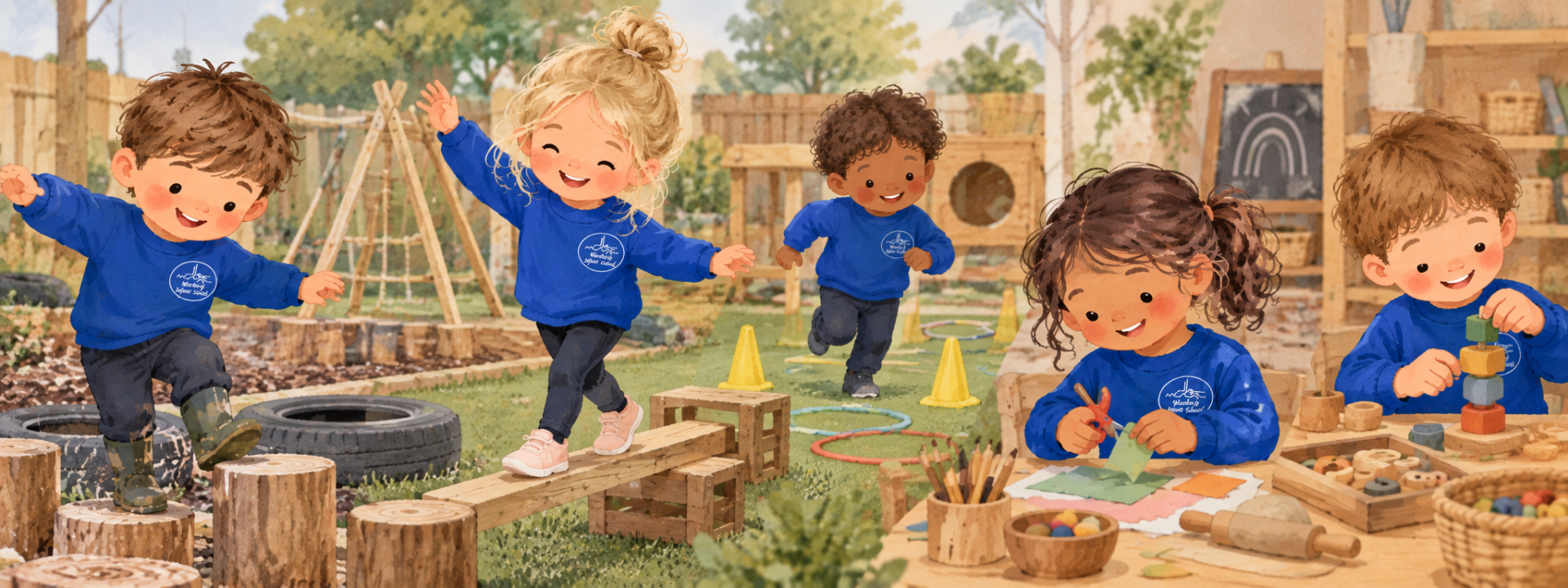
Image created using AI by Westbury Infant School
Reception is an active year filled with movement, challenge and discovery. Children develop confidence in what their bodies can do as they run, climb, balance, dance, build, draw and use an increasing range of equipment.
Physical development supports far more than movement. It helps children become independent, take care of themselves, manage risks and develop the strength and coordination needed for writing and other classroom activities.
Through daily movement, regular physical challenges and carefully planned indoor and outdoor experiences, we help children become active, capable and confident learners.
What Happens in Reception?
Children have regular opportunities to develop their physical skills through:
- outdoor learning;
- movement and action games;
- climbing and balancing;
- running, jumping and travelling in different ways;
- throwing, catching, rolling and kicking;
- apparatus and obstacle courses;
- bikes and wheeled equipment;
- music and dance;
- construction and practical activities;
- drawing, painting and modelling; and
- activities that strengthen hands and fingers.
Adults teach children how to use spaces, tools and equipment safely. The environment is enhanced with new challenges that encourage children to practise, combine and apply their skills.
Children are supported to recognise sensible risks, make safe choices and develop confidence when trying something new.
Gross-Motor Development
Gross-motor skills involve the large muscles of the body. They support balance, strength, coordination and control.
Children learn to:
- move confidently in different ways;
- negotiate space and avoid obstacles;
- change speed and direction;
- balance in different positions;
- climb safely;
- jump and land with increasing control;
- throw towards a target;
- catch, roll, kick and control a ball;
- use bikes and wheeled equipment;
- follow movement sequences;
- respond to music through movement; and
- combine movements during games and physical challenges.
Gross-motor development also supports children’s posture and core strength. These provide important foundations for sitting comfortably, controlling tools and writing.
Fine-Motor Development
Fine-motor skills involve the smaller muscles in the hands, wrists and fingers.
Children strengthen and coordinate these muscles through activities such as:
- drawing and painting;
- threading and weaving;
- using tweezers and small tools;
- manipulating dough and modelling materials;
- cutting with scissors;
- completing puzzles;
- using construction equipment;
- fastening and joining materials;
- handling small objects; and
- using pencils and other writing tools.
These experiences prepare children for increasingly controlled drawing, letter formation and writing.
Children are taught how to hold and use tools effectively. They develop a comfortable pencil grip and learn the movements needed to form letters correctly.
Handwriting Foundations
Successful handwriting depends upon the development of the whole body, not only the hand.
Before children can write comfortably and fluently, they need:
- core strength and stability;
- shoulder and arm control;
- wrist strength;
- hand and finger strength;
- hand-eye coordination;
- an effective pencil grip; and
- an understanding of letter movements.
Children therefore experience a wide range of physical, creative and practical activities alongside direct handwriting teaching.
Regular practice helps letter formation become increasingly secure and automatic. This allows children to concentrate more fully on spelling and communicating their ideas.
Health and Self-Care
Physical development also includes learning how to care for ourselves and make healthy choices.
Children are supported to:
- understand that movement helps keep their bodies healthy;
- recognise when they need rest or a drink;
- understand the importance of healthy food choices;
- wash and dry their hands effectively;
- use the toilet independently;
- manage their clothing;
- put on and fasten their coats;
- use cutlery;
- care for their belongings; and
- follow routines that support health and safety.
Developing these skills helps children feel capable and prepares them for increasing independence.
Our Vision and Values
Physical development provides many opportunities for children to live out our school values.
Children develop resilience when they practise a difficult skill, recover from a mistake and try again.
They show teamwork and friendship when they play games, cooperate and encourage one another.
They demonstrate respect by sharing spaces and equipment, following safety expectations and recognising the needs of others.
Children work towards excellence by practising, improving and taking pride in what they can achieve.
These experiences help children belong, thrive, achieve and play.
How Physical Development Progresses Across the Year
Across Reception, children move from:
- learning how to use spaces and equipment safely towards making increasingly independent choices;
- developing basic strength and balance towards combining movements with greater control;
- exploring balls and equipment towards applying object-control skills in games;
- following simple movements towards remembering and creating movement sequences;
- using bikes and apparatus with support towards navigating them confidently;
- strengthening hands and fingers towards using tools with precision;
- developing an effective pencil grip towards forming letters with greater control;
- relying on adult help with self-care towards managing their needs independently; and
- attempting new physical challenges towards adapting their movements and persevering when something is difficult.
Children develop at different rates. Activities and support are adapted so that every child can participate, experience success and make progress.
How Can Families Help at Home?
Developing Strength and Coordination
- Visit parks and outdoor spaces.
- Encourage running, jumping, climbing and balancing.
- Walk, scoot or cycle when possible.
- Create simple obstacle courses.
- Dance together and copy different movements.
- Play games that involve stopping, starting and changing direction.
- Encourage your child to carry, push and pull suitable objects.
- Provide regular opportunities for active play.
Developing Ball Skills
- Roll a ball backwards and forwards.
- Practise throwing and catching.
- Throw towards a large target.
- Kick a ball to one another.
- Practise stopping a moving ball.
- Try different sizes and types of balls.
- Celebrate effort and improvement rather than counting only successful catches.
Strengthening Hands and Fingers
- Draw, paint and colour.
- Use modelling dough.
- Build with construction toys.
- Complete puzzles.
- Thread beads or pasta.
- Use pegs, tweezers or tongs.
- Tear, fold and stick paper.
- Use child-safe scissors with supervision.
- Help with stirring, pouring and preparing food.
Building Independence
Encourage your child to:
- dress and undress;
- put on and fasten their coat;
- put on their shoes;
- use the toilet independently;
- wash and dry their hands;
- use a knife and fork;
- open lunch containers and packaging;
- carry and look after their belongings; and
- ask for help when they genuinely need it.
Allow extra time for your child to practise rather than completing tasks for them. Praise effort, perseverance and growing independence.
Supporting Physical Confidence
Children may approach physical challenges in different ways. Some join in immediately, while others prefer to watch before having a go.
Families can help by:
- introducing new challenges gradually;
- demonstrating an activity;
- reassuring children that mistakes are part of learning;
- avoiding comparisons with other children;
- praising effort and determination;
- celebrating small improvements; and
- making physical activity enjoyable.
Our Physical Development Progression Documents
The documents below provide more detail about the knowledge and skills taught throughout Reception.
Talk to Us
Please speak to your child’s class teacher if you would like advice about physical development, independence or self-care, or if you have questions about your child’s progress.
By working together, we can help children become active, resilient and increasingly independent.