Personal, Social and Emotional Development in Reception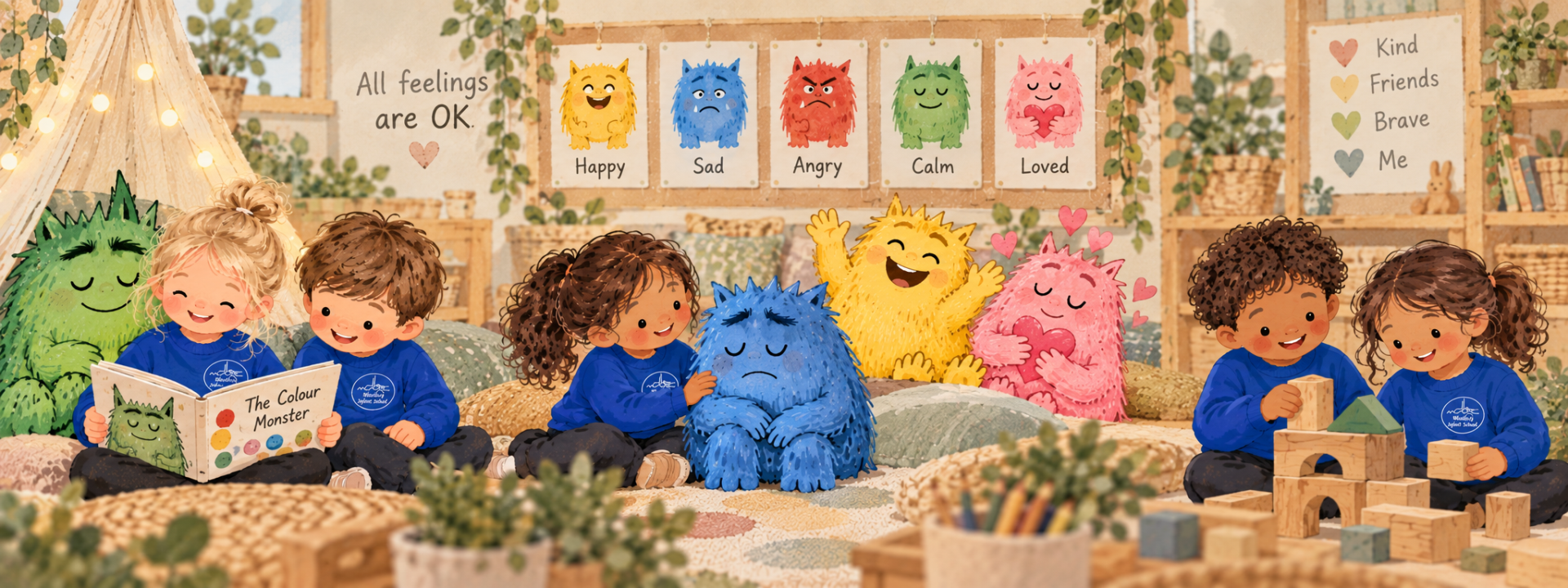
Image created using AI by Westbury Infant School
Reception is a year of new friendships, growing confidence and increasing independence. Children learn that they belong to a caring community where their feelings, ideas and experiences matter.
Personal, Social and Emotional Development is at the heart of everything we do. When children feel safe, understood and valued, they are more able to explore, communicate, manage challenges and enjoy learning.
Through secure relationships, consistent routines, thoughtful teaching and purposeful play, we help children understand themselves, build positive relationships and develop the emotional skills they need for school and life.
Personal, Social and Emotional Development is organised into three connected areas:
- Self-Regulation
- Managing Self
- Building Relationships
What Happens in Reception?
Children develop their personal, social and emotional skills throughout the day.
They learn through:
- warm and responsive relationships with adults;
- friendships with other children;
- clear and predictable routines;
- stories and discussions about feelings and relationships;
- role play and imaginative experiences;
- games involving cooperation and turn-taking;
- classroom responsibilities;
- problem-solving during play;
- direct teaching about emotions, behaviour and safety; and
- opportunities to make choices and become independent.
Adults model respectful relationships and help children understand how their words and actions affect other people.
At first, children may need an adult to help them recognise and manage strong feelings. This is known as co-regulation. Over time, children begin to use taught strategies with increasing independence.
Self-Regulation
Understanding Feelings
Children learn that everyone experiences different emotions and that all feelings are valid.
They develop the vocabulary to describe feelings such as:
- happy;
- excited;
- proud;
- calm;
- worried;
- sad;
- disappointed;
- frustrated;
- angry;
- nervous; and
- lonely.
Stories, including The Colour Monster, help children talk about emotions and consider what might cause someone to feel a particular way.
Children learn to notice how emotions can feel in their bodies and begin to recognise signs that they may need help or time to regulate.
Managing Emotions
Adults support children to develop positive ways of managing strong feelings.
Depending on the child and situation, strategies may include:
- talking to a trusted adult;
- taking slow breaths;
- having a quiet moment;
- using words to explain what is wrong;
- asking for help;
- moving away from a difficult situation;
- trying a task in smaller steps;
- finding a solution with another child; or
- returning to an activity when they feel ready.
The aim is not to prevent children from experiencing difficult emotions. Instead, we help them understand their feelings and respond safely and appropriately.
Attention and Learning Behaviours
Self-regulation also includes being able to focus, listen and respond to expectations.
Children learn to:
- listen to adults and other children;
- follow instructions;
- shift their attention when necessary;
- wait for a turn;
- manage small disappointments;
- persist when learning is difficult;
- cope when something does not go to plan; and
- ask for support.
These skills develop gradually through supportive relationships, clear routines and repeated practice.
Managing Self
Confidence and Independence
Children are encouraged to see themselves as capable learners.
They develop confidence by:
- making choices;
- trying new experiences;
- expressing their needs;
- sharing their ideas;
- taking responsibility;
- completing familiar tasks;
- solving manageable problems; and
- recognising their own progress.
Adults provide enough support for children to succeed while allowing them time to attempt tasks independently.
Children learn that making mistakes is a normal and valuable part of learning.
Personal Care
Children become increasingly independent in managing their personal needs.
They learn to:
- use the toilet independently;
- wash and dry their hands;
- put on and fasten their coat;
- manage simple clothing;
- use cutlery;
- organise their belongings;
- tidy resources;
- recognise when they need a drink, rest or help; and
- follow familiar health and safety routines.
Growing independence helps children feel confident and prepares them for Year 1.
Healthy and Safe Choices
Children learn that their choices can affect their health, safety and wellbeing.
They develop an understanding of:
- healthy food choices;
- the importance of physical activity;
- personal hygiene;
- rest and sleep;
- using equipment safely;
- recognising trusted adults;
- understanding personal boundaries; and
- asking for help when something feels wrong.
Information is taught in an age-appropriate and reassuring way.
Building Relationships
Developing Friendships
Reception provides many opportunities for children to form friendships and learn how relationships work.
Children learn to:
- approach other children;
- invite someone to join their play;
- share ideas and resources;
- take turns;
- listen to other viewpoints;
- cooperate towards a shared goal;
- offer and accept help;
- show kindness;
- recognise when someone may feel left out; and
- repair a relationship after a disagreement.
Adults support children to develop the language needed for successful relationships.
Resolving Disagreements
Disagreements are a normal part of learning how to relate to others.
Rather than simply resolving every problem for children, adults help them:
- explain what happened;
- listen to the other person;
- describe how they feel;
- consider another point of view;
- think of possible solutions;
- agree what to do next; and
- return successfully to their play.
Children gradually become more able to solve manageable social problems independently.
Respecting Others
Children learn that people may have different families, experiences, interests, abilities, cultures and beliefs.
They are encouraged to:
- value similarities and differences;
- use respectful language;
- listen to other people;
- include others;
- challenge unkindness;
- respect personal boundaries; and
- recognise that everyone has a right to feel safe and valued.
This helps create a classroom in which every child feels that they belong.
Our Vision and Values
Personal, Social and Emotional Development brings our school vision and values to life.
Children belong when they feel safe, included and accepted.
They thrive when they develop confidence, positive relationships and emotional wellbeing.
They achieve when they can focus, persevere and approach challenges positively.
They play as they cooperate, negotiate, imagine and build relationships.
Children demonstrate respect by listening and caring about the feelings of others.
They develop friendship by showing kindness, including others and repairing relationships.
They use teamwork when they cooperate, share ideas and work towards a common goal.
They show resilience by managing setbacks, attempting difficult tasks and trying again.
They work towards excellence by taking responsibility, making thoughtful choices and doing their best.
How Personal, Social and Emotional Development Progresses Across the Year
Across Reception, children move from:
- settling into the classroom towards developing a secure sense of belonging;
- relying on adult co-regulation towards using familiar strategies more independently;
- naming basic emotions towards explaining possible causes and consequences;
- needing support with routines towards managing familiar responsibilities;
- playing alongside others towards cooperating and developing sustained friendships;
- relying on adults to resolve disagreements towards suggesting and agreeing solutions;
- avoiding difficult tasks towards showing greater resilience;
- needing reminders about healthy and safe choices towards making them more independently; and
- feeling uncertain about change towards preparing positively for Year 1.
Children develop at different rates. Adults respond sensitively to each child’s experiences, temperament and individual needs.
Transition to Year 1
As the end of Reception approaches, children are supported to reflect on their achievements and prepare for change.
They have opportunities to:
- talk about how they have grown;
- celebrate what they can now do;
- discuss their feelings about moving into Year 1;
- meet adults who will support them;
- become familiar with new routines and spaces;
- ask questions;
- practise increasing independence; and
- understand that mixed feelings about change are normal.
Information is shared with Year 1 teachers so that children’s strengths, needs and important relationships are understood.
How Can Families Help at Home?
Talking About Feelings
- Name and talk about emotions.
- Explain that all feelings are acceptable, although some behaviours are not.
- Talk about how emotions can feel in the body.
- Discuss what helps different people feel calm.
- Use stories to explore how characters may be feeling.
- Help your child identify trusted adults.
- Give your child time to talk without immediately trying to solve the problem.
Developing Independence
Encourage your child to:
- dress and undress;
- put on and fasten their coat;
- use the toilet independently;
- wash and dry their hands;
- use cutlery;
- carry their belongings;
- complete simple household tasks;
- tidy away activities;
- make appropriate choices; and
- ask for help when necessary.
Allow time for your child to attempt tasks before stepping in.
Supporting Friendships
- Model kind and respectful communication.
- Practise sharing and turn-taking through games.
- Talk about what makes a good friend.
- Help your child consider another person’s point of view.
- Encourage them to use words when resolving a disagreement.
- Avoid labelling another child as “naughty” or “mean”.
- Reassure your child that friendships can change and disagreements can be repaired.
Building Resilience
- Praise effort, improvement and perseverance.
- Talk positively about mistakes.
- Break difficult tasks into manageable steps.
- Avoid completing every challenging task for your child.
- Help them think of another approach.
- Remind them of previous challenges they have overcome.
- Celebrate the courage involved in having a go.
Supporting Routines and Behaviour
- Maintain clear and predictable routines where possible.
- Give simple and consistent expectations.
- Explain the reason for important boundaries.
- Offer limited choices your child can manage.
- Give advance warning when an activity is going to end.
- Notice and praise positive behaviour.
- Model the calm and respectful behaviour you want to see.
Our Personal, Social and Emotional Development Progression Documents
The document below provides information about the knowledge and skills taught throughout Reception.
Talk to Us
Please speak to your child’s class teacher if you have questions about their confidence, friendships, behaviour, independence or emotional wellbeing.
Sharing information about changes, worries or significant experiences at home helps us provide sensitive and consistent support.
By working together, we can help every child feel secure, develop positive relationships and approach learning with confidence and resilience.